Where Giants Fall - v0.63 Patch Notes
The biggest patch yet. Real hills across every stage, the Trial of Ascension replacing the Ritual Beacon, a rebuilt Giantforge with 26 Legendaries, Power Rush you can steer, the new Venom Rift ability, and a Loot Goblin you rob instead of kill.
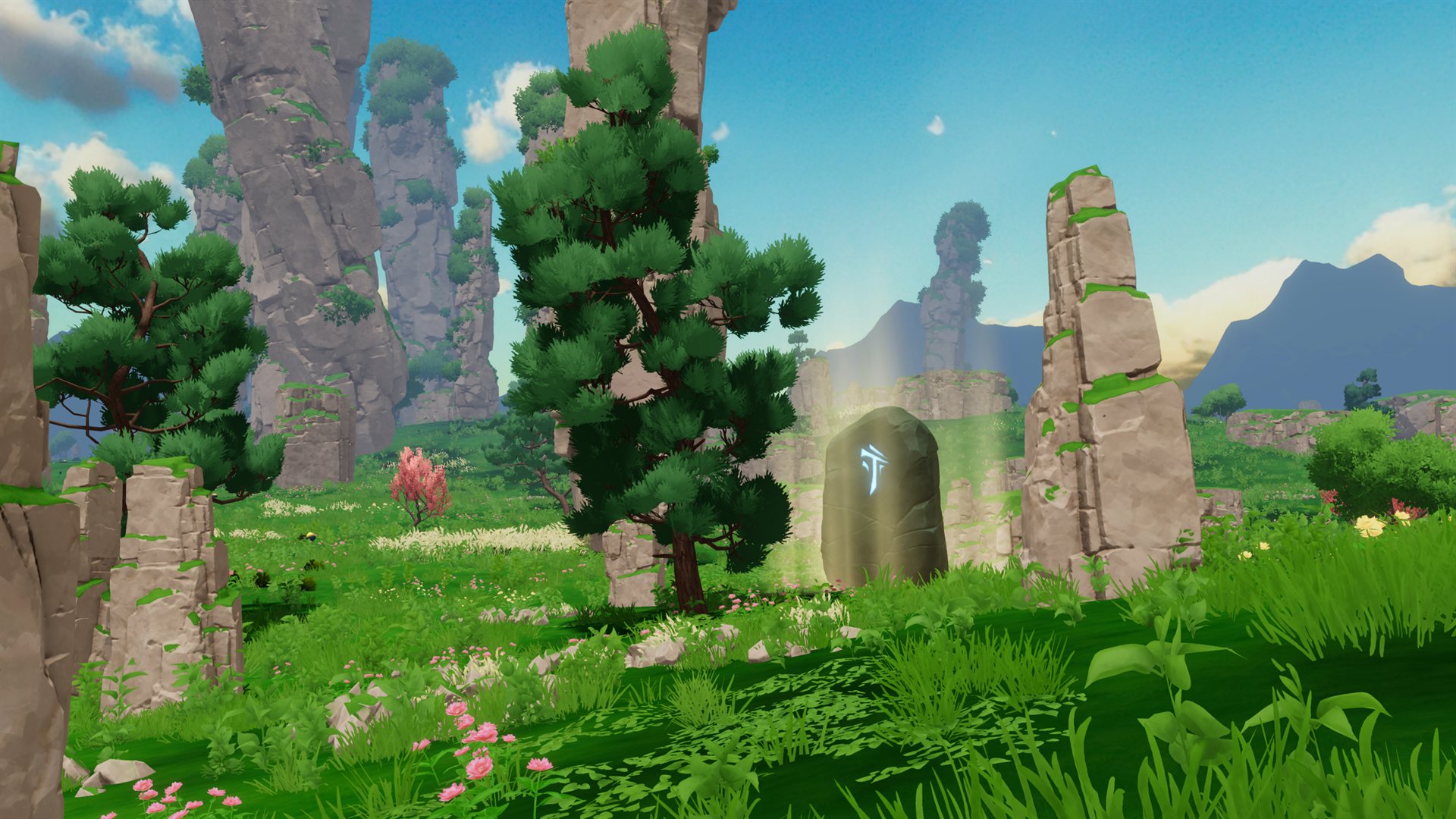
v0.63 is the biggest patch Where Giants Fall has had. The ground you fight on, the camera you fight through, the numbers you read, the Giantforge, the item catalog, the controller layout and the entire Ritual Siege payoff have all been rebuilt.
Stages have real elevation now. Broad hills, wide valleys, long ridgelines, plateaus that run the width of the map. And the shape of the land no longer follows the biome, so a desert can be ridge country and a forest can be open plains.
The Ritual Beacon is gone. In its place is the Trial of Ascension, a flight across the biome that ends with you coming back down like a meteor. The Giantforge rolls exact values and hands out four times as many strong cards. Crimson Reavers and Blood Pact were rebuilt from scratch, Venom Rift is new, and the Loot Goblin is no longer something you kill. He is something you rob.
v0.63 playtest clips
Some clips from playtesting the v0.63 build. Not a tour of everything below, just a look at it in motion.
Major Highlights
- Stages are properly hilly, and the land no longer follows the biome.
- The Trial of Ascension replaces the Ritual Beacon. Fly a ring course across the biome, win or lose it on your steering.
- Win the Trial and you land like a meteor, throwing the whole field to the rim and halving the army’s speed for the rest of the Ritual.
- The Giantforge rolls exact values. Ranks are gone. Epic-or-better offers went from 1 in 20 to about 1 in 5.
- 26 Legendary enhancements, two for every weapon: one Core, one Ultimate.
- Power Slide is now Power Rush, and you can steer it. Charges come back twice as fast.
- Damage numbers were rebuilt. Big hits look big, and Bleed, Burn and Poison each run their own stream.
- Crimson Reavers is a wounding weapon instead of a swarm of returning axes.
- Blood Pact is a bomb you charge, building a real shield out of your lifesteal.
- Venom Rift is a new ability: a long poisonous fissure torn through the battlefield.
- The Loot Goblin cannot be killed. Beat treasure out of him through six tiers before he escapes.
- Lifesteal finally heals for what it says, and seven new items reward Giantstride and Power Rush.
- Controller support was rebuilt, and Steam Deck now runs the same game as PC.
The World
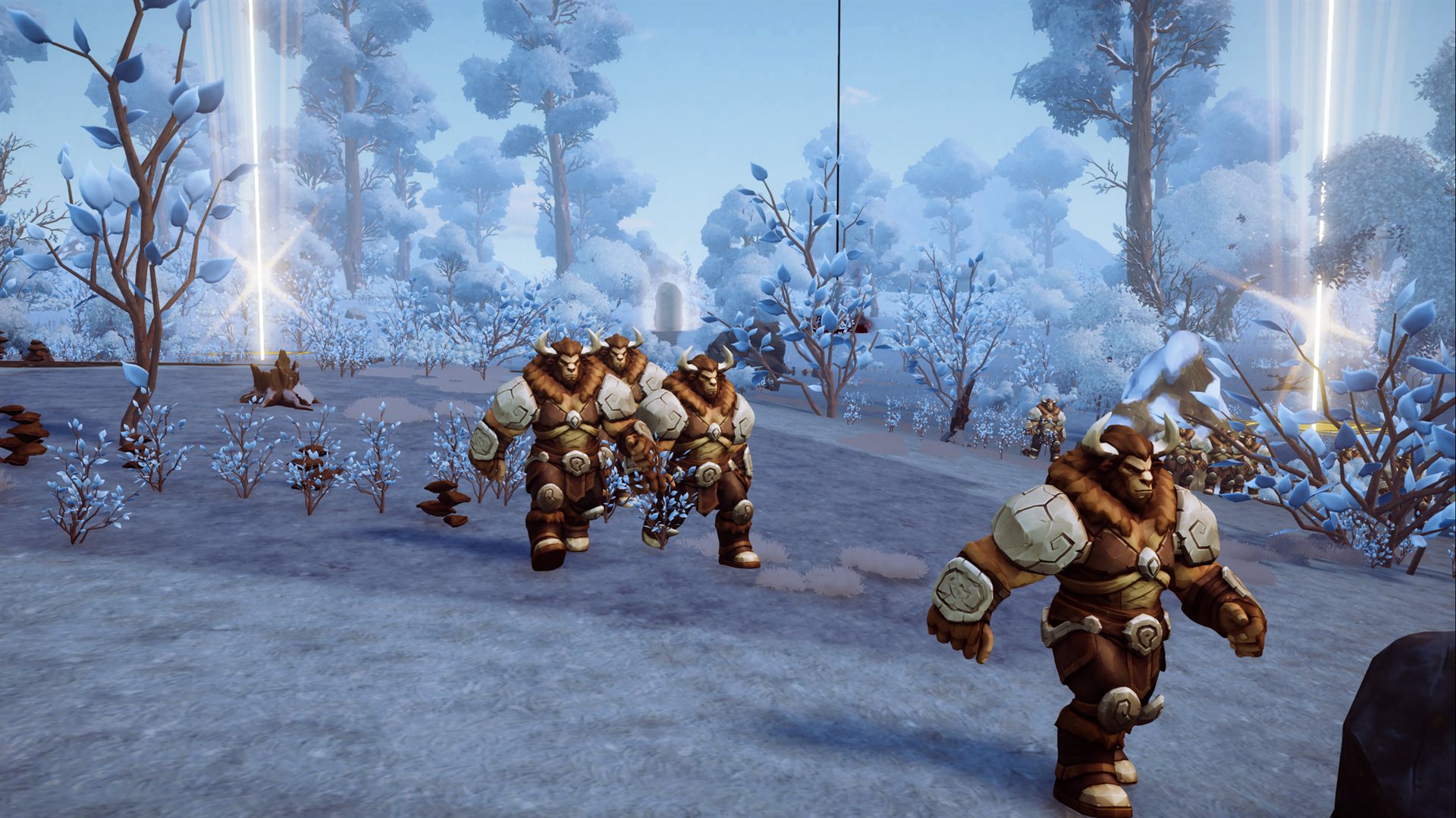
- Landscapes are properly hilly now. Stages carry real elevation: broad hills, wide valleys, long ridgelines, raised plateaus and slow climbs that cross the whole map, instead of a mostly flat plain with occasional lumps.
- The steep, unfightable ground is gone. Some stages used to grow sudden hillsides you had to climb through mid-fight, and roughly half of every map was pinned dead flat. Hills are broad and gradual by design now, and nothing steeper than a readable slope can appear where you fight.
- The land no longer follows the biome. Any biome can be open plains, a long ridge, a broad valley or high plateau country. Forest, desert, swamp and mountains each shape their own landscape from run to run instead of always looking the same underneath.
- Ritual arenas sit in the landscape instead of in a crater. The ritual ground is still level enough for the fight, but it rests wherever the land puts it, sometimes as a plateau above the surrounding country, and eases into the terrain around it rather than dropping into a circular pit.
- Boss arenas are no longer perfectly flat. They gain a couple of metres of gentle rise and fall across the whole arena. Telegraphs, ground effects and safe zones behave as before.
- Terrain lighting no longer breaks along an invisible grid. Hard seams ran across the world in a regular pattern. They are gone.
- Swamp trees and rocks now block you where they look solid. Broad, irregular trunks use their real shape instead of a small centre post, and rocks keep their silhouettes and visible gaps instead of becoming invisible boxes.
- Bright pink patches no longer appear over effects. Drifting leaves and stray clouds could render as flat magenta shapes in the released game while looking correct in development, and leaves from the wrong biome could follow you into the next stage. Ambient effects are rebuilt for each new area now instead of being carried over.
- Silverpine Forest has stronger combat contrast. Snow, fog and ambient light are less washed out, while bright attacks keep their colour and impact.
- Roads are visible in Regular stages again.
The Trial of Ascension
The destabilising statue that spawned waves of extra enemies has been removed. A Trial of Ascension node takes its place mid-siege.
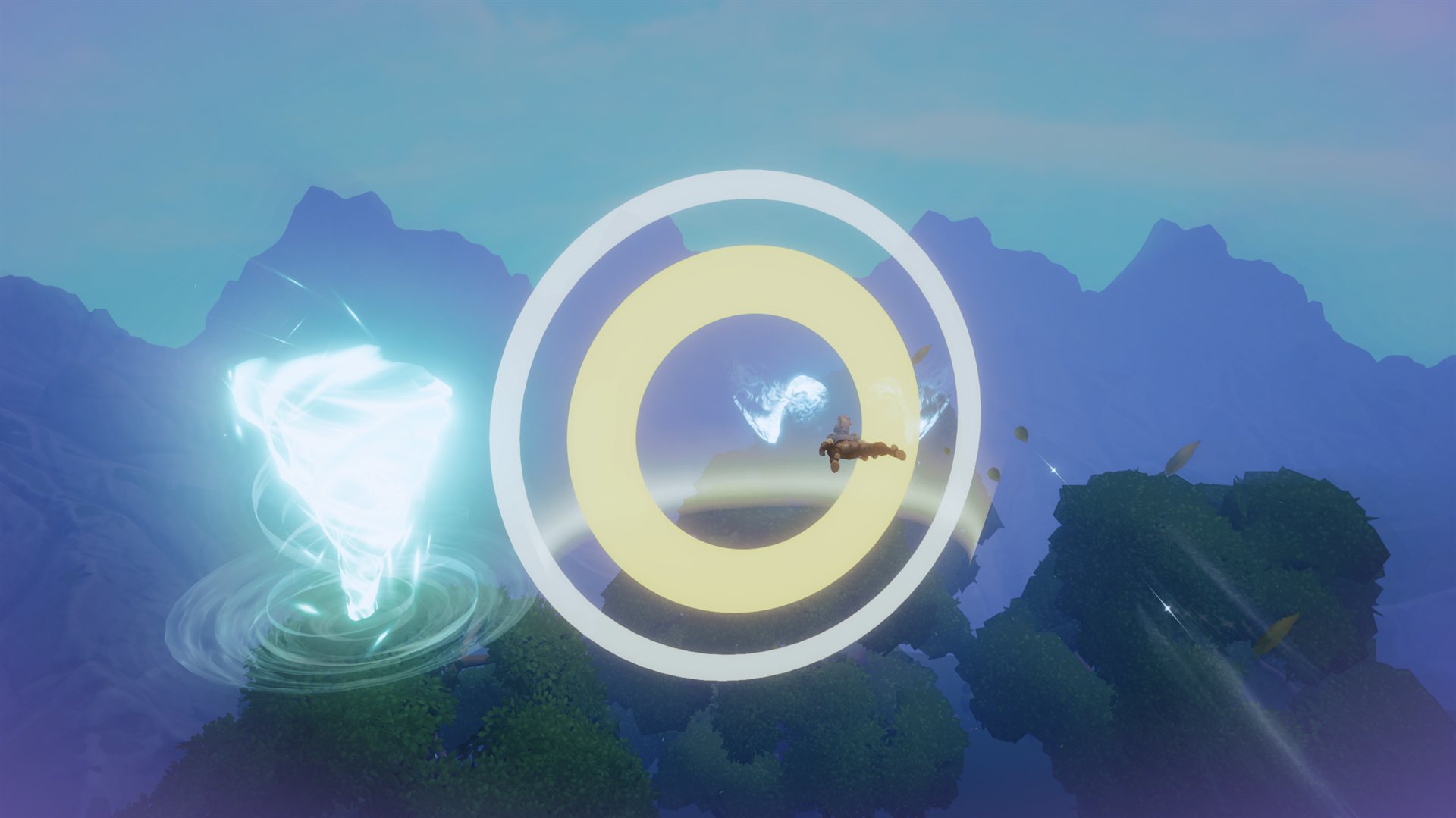
- The Trial is a journey across the biome, not a ring course over the battlefield. Walk into the node and the battlefield freezes while you are thrown to roughly 260 metres. You no longer plummet. The glide is far flatter at the same speed, covering more than four metres of ground for every metre you drop, and the rings are spread across a huge stretch of the world instead of circling the arena.
- The battlefield boundary steps aside for the Trial. The wind that pushes you back into the fight is suspended while you fly and restored the moment you land.
- Rings are seconds apart, not metres. The opening ring is about five seconds out and asks for a token correction. After that each transition is a two to three second flight, with the occasional long one, and the course leans into broad sweeping turns, S-curves and long lateral runs.
- The rings are smaller and count for more. The visible ring has shrunk, so threading it is a real piece of steering. But the area that actually counts is now larger than what you see. If it looks like you flew through the ring, it counts. Obvious misses still miss.
- No more rings that quietly fail to register. At this speed you could cross a ring entirely between two frames. A clean pass can no longer be swallowed.
- The first ring tells you where it is. You are thrown a quarter of a kilometre into the sky with the camera still settling, and finding the opening ring was the hardest part of the Trial for the wrong reason. It carries its own marker now, in a colour nothing else uses, with the distance to it. The marker leaves the moment you fly it.
- Everything after the first ring asks more of you. The first ring is the introduction and is unchanged. The second demands a real correction, and the course escalates from there. The Trial got harder to route, not harder to hit.
- Power Rush is the heart of the Trial. Press it in the air for a hard forward surge that flows into a controllable climb, crests, and settles back into the glide. You keep full steering the whole way, and it costs the same two charges it always has.
- Every ring you fly gives a charge back. One charge per ring, into the same pool your Dash uses, never above your maximum. Fly well, earn charges, and choose when to spend two of them.
- Tornadoes are scattered across the sky, not parked behind every ring. There used to be one dormant tornado behind each ring, switched on only once you had already missed it, so the Trial read as ring, tornado, ring, tornado, with no decision to make. Nine of them now stand at varied heights and distances across the whole descent, live from the moment you launch. Some rings have one close by. Some have none.
- You can take a tornado on purpose. Dive too hard, misjudge a line, or just want more height, and a tornado is a route you can choose to fly. It throws you skyward far harder than a Power Rush can. Using one well is a decision, not a rescue.
- Miss a ring and the nearest tornado ahead becomes your second chance. If none is close enough to reach, one appears on the line you are already flying, so a miss is always recoverable. Fail to reach it and the Trial is over. You get two recoveries per Trial.
- Winning the Trial feels like winning it. Passing the final ring locks the victory immediately and nothing after it can take that away. The sky stays dark, the wings stay out, and you hold there for a beat before being thrown back down onto the battlefield.
- You come back down like a meteor. Arrival erupts in a holy blast, the largest shockwave in the game so far, throwing the entire field to the rim: lesser enemies, elites and minibosses together, alive and already walking back. The Giant, the Champion and the Warden stand their ground.
- The whole army is slowed by half for the rest of the Ritual. Every eligible Ritual enemy moves at half speed once you have completed the Trial, including everything that spawns afterwards.
- Failing costs you nothing but the payoff. No extra Giant Power, no damage, no penalty. You just do not get the eruption or the slow.
The Ritual Champion sacrifice
- You can finally see what a successful sacrifice costs you. When the Champion reaches the Giant, the Giant answers with a pulse that rolls out across the battlefield, and every Ritual enemy visibly swells.
- The sacrifice empowers the entire army for the rest of the Ritual: +25% Size, +25% Maximum Health and +25% Movement Speed. Enemies already fighting keep the same share of their health when their pool grows, so a half-dead enemy stays half dead. Everything that spawns afterwards arrives empowered.
- The banner says what happened, instead of a line that only mentioned the sacrifice itself.
- The two Ritual outcomes stack against each other. Complete the Trial and lose the Champion, and the army ends up slower than it started but not by half. The slow and the empowerment combine rather than one cancelling the other.
- Picking up an enhancement sack tells you what it does. It showed the rarity, the icon, the name and the weapon, then stopped, leaving out the one thing that decides whether the reward mattered. It now lists the effect and the exact values that sack rolled.
- The Ritual Anchor’s orb volley launches immediately. Orbs spawn beyond the statue and pass through their living owner instead of piling up around it until the anchor dies.
- Iron Tyrant, Ritual Warden and Ritual Champion announce themselves. Each has its own arrival sound.
The Giantforge, rebuilt
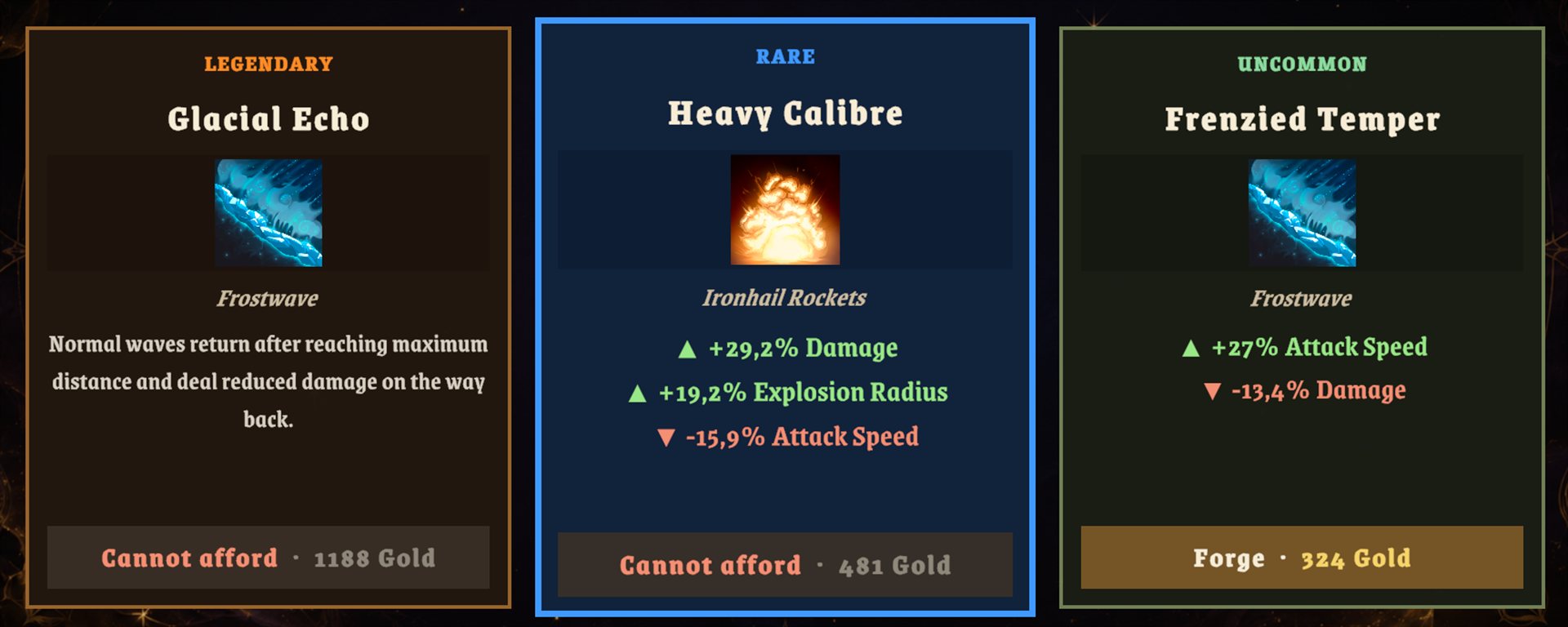
- All three cards roll independently from the same rules, so any mix of rarities can appear, including several Legendaries at once. Stage progress and boss kills no longer affect Forge rarity.
- Luck affects rarity and nothing else. At neutral Luck, Forge cards roll at 26% Common, 28% Uncommon, 25% Rare, 13% Epic and 8% Legendary. More Luck raises the chance of Rare, Epic and Legendary cards, hardest toward the very top of the table, while Common cards always stay possible.
- The Forge is far more generous. Epic-or-better offers went from 1 in 20 to roughly 1 in 5. There were 26 Legendary enhancements sitting behind what used to be a 1% roll.
- Cards roll exact values. Every Common-through-Epic card has a visible range and takes one shared quality roll, so its bonuses and drawbacks rise together. What the card shows is what the run keeps. There are no enhancement ranks.
- The stat-card catalog was retuned. Common cards allow three independently rolled copies, Uncommon and Rare allow two, and each Epic allows one. Different Epics can now be combined on the same weapon.
- Coverage names and improves the weapon’s real footprint. It becomes Chain Range, weapon range, Wave Width, Explosion Radius, Cone Width or Area as appropriate. Ancient Spirits has no Coverage card, and Wildfire stays outside the Forge.
- Every supported weapon has two Legendary transformations: one Core choice available immediately, and one Ultimate choice that appears after the weapon’s Ultimate is unlocked. Both can be forged in the same run, and duplicates stay blocked.
- All 13 Legendary pairs have their own effects. Eternal Hunt / Ancestral Legion, Splintering Sky / Storm of Blades, Endless Reaping / Blood Moon, Phoenix Heart / Solar Cataclysm, Black Bloom / Virulent Deluge, Redline Tracers / Full Auto Apocalypse, Threefold Damnation / Abyssal Reckoning, Fractured Horizon / Event Horizon, Glacial Echo / Absolute Zero, Forked Fate / Heaven’s Verdict, Alpha Fang / Great Hunt, Cluster Payload / Siegebreaker, and No Appeal / Final Judgment.
- Prices start at 120 / 220 / 380 / 620 / 950 gold by rarity. Stronger rolls raise Common-through-Epic prices a little, and the Legendary price is fixed. The Forge still cannot take more than 40% of your maximum health.
- Controller focus matches what Submit activates. Opening the Forge no longer spends the same press on an immediate reroll, and a focused offer buys that card instead of whichever footer button had quietly kept focus.
Items, rebuilt
- Items reward the movement you actually use. Giantstride and Power Rush were the two systems almost no item touched, so a large part of the catalog now points at them. Sprinting across a stage and sliding into a pack are things you can build around.
- Seven new items. Scholar’s Token (+7% XP Gain), Second Wind (+20% Dash Charge Recovery Speed), Blood Chalice (+1% Lifesteal), War Scholar (+8% XP Gain, +5% Damage vs Elites), Longroad Idol (+20% Giantstride Max Speed, and Giantstride builds 25% faster), Ascendant Codex (every 5 levels you earn, gain a bonus level) and Momentum Crown.
- Momentum Crown: Dash and Power Rush no longer break Giantstride, and you gain +1 maximum Power Charge. No conditions, no chain to keep alive, no levels to maintain. Landing out of an airborne Power Rush used to throw away most of the speed you had built. With the Crown it costs you nothing, every time. The Crown grants no speed of its own. Your top speed is what it always was. What the Crown gives you is the ability to hold it instead of rebuilding it after every move.
- Every item states how many copies you can hold. Eighteen items have a limit and the rest are unlimited. Once you hold the last copy of an item, it stops appearing.
- Chance-on-hit is mostly gone. Items that used to fire on a fraction-of-a-percent roll now trigger on something you can see and aim for. Armageddon lands on a kill count. Berserker’s Pulse turns on below 40% health and stays on until you climb back over 60%. Arcane Surge builds through sustained fighting instead of waiting on a one-in-four-hundred hit.
- Rotfin Charm, Skyfracture Sigil and Phantom Wake belong to the slide now. Rotfin Charm makes Power Rush collisions hurt and shove enemies aside, Skyfracture Sigil calls down a Skybreaker strike when you slide, and Phantom Wake grants its extra projectiles on a dash or a slide.
- Rotfin Charm hits twice as hard, shoves half again as far, and stuns. Ramming a lesser enemy with Power Rush leaves it stunned for 1.5 seconds on top of the damage and the knock aside. Elites and minibosses are moved less and are not stunned, and bosses are not moved at all.
- Aegis Weave grants a Ward instead of immunity. Dashing or power sliding gives you a shield worth 10% of your maximum health for 1.5 seconds: protection you can spend, rather than a second of untouchability.
- Bloodfangs turns wasted healing into a shield. It grants 2% lifesteal outright, and lifesteal you cannot use at full health builds a Blood Ward up to 20% of your maximum health.
- Retunes across the catalog. Honed Edge is +7% Crit Chance and +25% Crit Damage. Giant’s Resolve is +15% Damage and +15% Max HP. Fleetstep Greaves trades raw speed for +10% Move Speed and +20% Giantstride Max Speed. Sanctuary Canopy’s stand-still regen becomes a flat +50% HP Regen. Slickstep Resin adds Power Rush momentum retention alongside its speed. War Drums, Windveil and Stormwing Harness all feed the slide now.
- Hare’s Lure trades its jump height for Giantstride build speed. Harefoot Charm remains the jump item.
- Gliding is no longer an item. Stormwing Harness gives +20% Air Move Speed and makes an airborne Power Rush cost one fewer dash charge. Glide still appears in the Follow the Lights trial.
- Armageddon hits for a flat 6,666 every 250 kills. Everything caught in the blast takes that much, whether it is a lesser enemy, an elite, a miniboss, a giant or a boss. Nothing you build raises or lowers it.
- Two items did nothing at all, and now work. Fate’s Ace never granted its +10% Luck and Stoneblood Tonic never granted its +30 Max HP. Both were shipping with nothing behind the card.
- No more dead picks. Items disappear from every reward, drop and shop once another copy cannot help you: Emberroot Draught at 8 copies, Duelist’s Feint at 10, Frostbite Sigil at 10, Omen of Clarity at 9, Arcane Surge at 5, Gilded Incense at 8. Slayer’s Feast also stops appearing once your critical chance is already at its 80% maximum.
- Emberroot Draught honours the −40% printed on its card. Twelve copies used to reach −60%, and the card had promised a limit that nothing enforced.
- The shop cannot sell you something you cannot use. It was possible to buy an item you had already maxed out, spending the gold for an item that never arrived. That offer no longer appears, and any purchase that cannot be completed refunds in full.
- Solar Ward, Gilded Incense and Duelist’s Feint count all your copies. Each of the three only ever applied a single copy’s worth when a run was restored mid-game, so part of the effect quietly followed you into the next run.
- Honed Edge no longer eats your critical chance. Once its own cap was reached it clawed back critical chance contributed by other items, and the loss stayed with you into the next run.
- Phoenix from the Flame keeps all its revivals, and Ember Talisman grants one projectile per copy, reliably.
- XP gain items were counted twice on orb pickups. Every XP bonus applies once now, so the number on the card is the number you get.
- Longroad Idol has its picture back, on the reward, the item list, choice cards, tooltips and the Card Gallery.
- Clearer cards. Gilded Incense states its +50% per copy, Arcane Surge tells you roughly how often it can fire, Solar Ward reads as the stacking shield it is, and Frostbite Sigil notes that elites and bosses freeze only briefly.
Movement: Power Rush
- Power Slide is now called Power Rush. Same mechanic, clearer name: a committed high-speed run that carves on the ground and glides when you leave it.
- You can steer a Power Rush again. Holding the aim button and steering turns a Rush on the ground and in the air. The camera used to lock to wherever you were already travelling, so aiming at a new direction asked the Rush to keep doing what it was already doing.
- Ground Power Rush carves. Sustained left and right turns hold their speed, so a fast Rush is a line you draw rather than a direction you fire yourself in.
- Airborne Power Rush steers like an aggressive wingsuit. A long glide can be repositioned deliberately, roughly a quarter turn per second at cruise, while a full reversal still costs you real time and distance.
- Slopes no longer take the wheel. Terrain still speeds you downhill, drains you uphill and keeps you glued to the surface, but it cannot drag your direction sideways while you steer somewhere else. Cross a hillside diagonally and you stay on the line you chose.
- A nearly-forward controller stick no longer drifts a Rush sideways. Small lateral noise is filtered out, while deliberate steering still ramps smoothly to full authority.
- Launching from the ground hits harder, closing the gap with an aerial entry.
- A Power Rush launches you slightly upward. On the ground it is a lift, not a hop. In the air it arrests a fall and hands a little altitude back.
- A Power Rush stays fast for longer. It used to shed speed from the first moment, so the launch was the only part that felt powerful. It holds almost all of its speed for the first second now, then eases into its decay. You travel about a quarter further, and the top speed is unchanged.
- Coming out of a Dash or Power Rush no longer stops you dead. That speed is carried and bleeds away smoothly with your stride already at full, so a Rush flows into a run instead of ending in one.
- Carried speed needs clear follow-through. Keep holding the direction you earned it in and it flows into Giantstride. Let go, ease the stick below halfway, or turn away, and the excess dies quickly. Steering itself is untouched. You turn as sharply as before, but a forward Rush cannot become a sideways sprint or an equally fast backpedal.
- Movement charges recover one at a time, in order. Dash and Power Rush share one pool of three charges. A Dash costs one, a Power Rush costs two. A single charge refills at a time, left to right, so you always know which one is next and how close it is.
- Charges come back twice as fast. A spent charge takes six seconds instead of twelve. Recovery-speed items stack on top of the new baseline as before.
- Spending a charge no longer throws away recovery you had earned. A charge sitting at 60% used to be quietly reset when you spent another one. It keeps its progress and finishes normally.
- The charge display fills as it recovers, with a small flash the moment a charge lands.
- Power Rush has a launch sound. The new whoosh is mixed beneath combat, so chaining Rushes stays forceful without smothering weapons and abilities.
Damage numbers
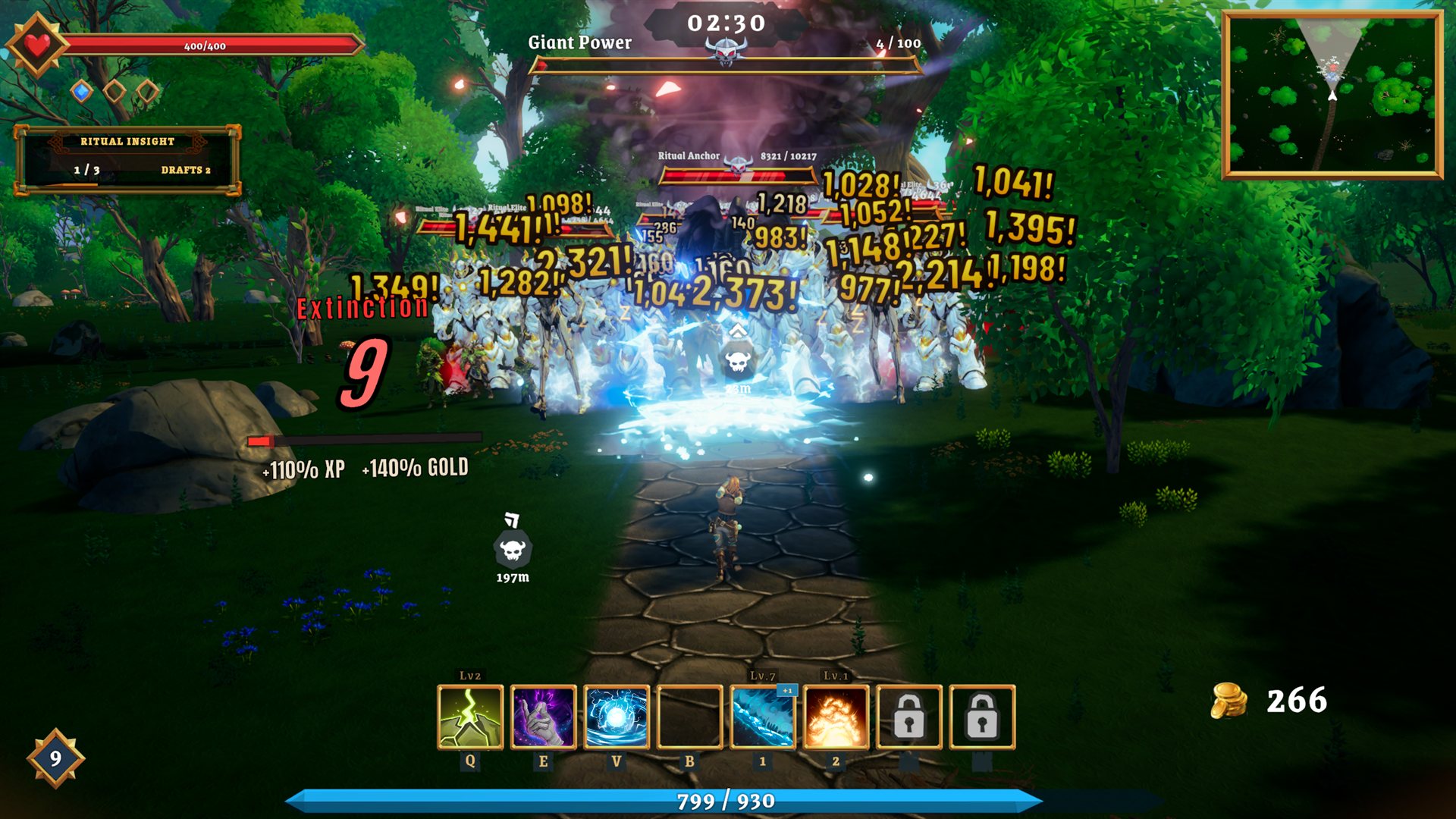
- Damage numbers come off the enemy you hit again. After the camera rebuild they had drifted away from their targets, and hits near the edge of the screen left numbers stranded along the border with no enemy under them. Numbers are placed purely from where the blow landed now, so moving or tilting the camera changes only your view of them.
- Big hits look big. A number is sized by how much of the enemy it took off, so a hit that removes a quarter of a giant erupts while a scratch stays small. An ordinary swing at the end of a run reads very differently from the same swing at the start.
- Numbers stay with the enemy that was hit. They ride their target for a moment before floating free, so fast movers no longer run out from under their own damage.
- Fast weapons drum. Repeat hits landing in quick succession drive the same number, and each one punches and flashes as it lands, so Machine Gun and Astral Fangs feel like a rapid tattoo of impacts rather than a total quietly ticking upward.
- Critical hits hit harder on screen. A stronger snap and shake, and they never get folded into the ordinary damage beside them. A critical is a quarter larger than the same hit without the critical, everywhere, at every size.
- Numbers no longer pile into the same spot. Repeat hits on one target fan out around the blow instead of stacking, so busy fights show more of your damage rather than less.
- A new, heavier typeface and clearer colour language. Ordinary hits are warm ivory, criticals are gold, Bleed is blood-red, Burn is ember-orange, Poison is venom-green, and healing is cyan. Large values use comma separators, and criticals carry a decisive exclamation mark.
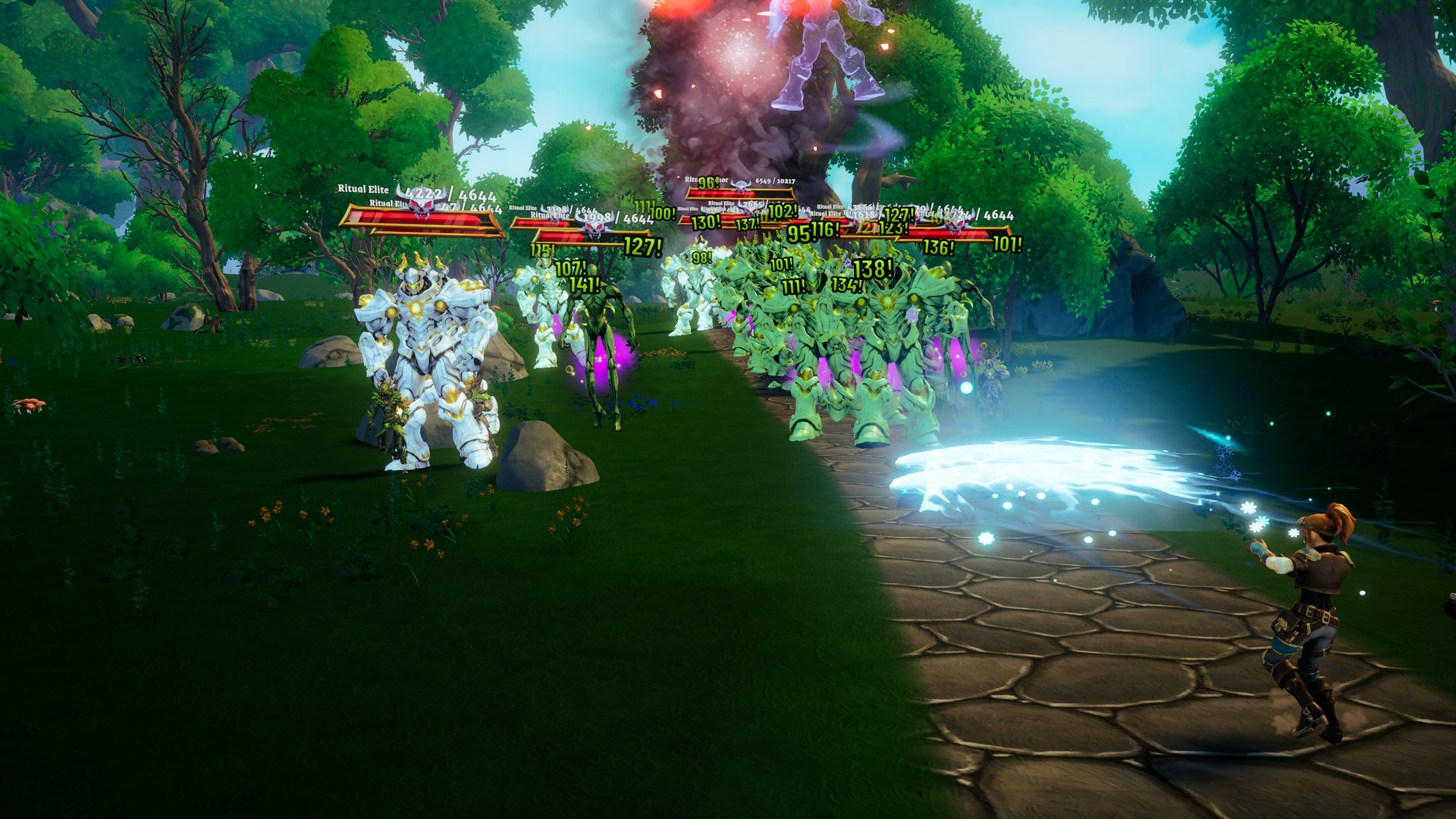
- Ticks read differently from hits. Ongoing damage numbers are smaller, calmer, sit lower on the body, and drift rather than punch. Bleeding, burning and poisoned enemies each show their own stream instead of one jumble.
- Bleed numbers are bigger and easier to read, with a heavier outline and a brighter red.
Weapons
Crimson Reavers, rebuilt
- Crimson Reavers is a wounding weapon now, not a swarm of axes. Axes no longer fly back to you. Each throw sends out a small number of much heavier axes that bury themselves in the first enemy they reach.
- Survivors Bleed and are Hamstrung. A wounded enemy takes damage over time and moves 15% slower for as long as the wound lasts. Wounds stack up to five times and refresh every time you land another axe. Bosses and giants are slowed at half strength.
- The upgrade path is new. Sharpened Throw, Twin Reavers, Long Hunt, Deep Wounds, Triple Reavers, Bloodburst, Open Arteries and Red Harvest. The weapon tops out at four axes instead of seven.
- Bloodburst makes bleeding enemies burst apart when they die, spraying everything within 2.25m. Open Arteries raises the wound limit from five stacks to seven.
- Crimson Guillotine is one enormous execution axe instead of a thirty-six axe barrage. It strikes as a guaranteed critical, hits harder for every wound already on its target, erupts in a shockwave, and leaves the survivor at maximum Bleed. It is three times the size of a normal axe, and Blood Moon larger again at over four times.
- A new mastery path: faster charge recovery, a fourth stored charge, a far heavier execution strike, a mark that makes survivors take more damage from your reavers, and Final Sentence, which cashes out every wound on the target at once and then opens them all again.
- Both Legendary transformations are new. Endless Reaping tears open a fully-wounded enemy for extra damage when you strike it. Blood Moon turns the Guillotine’s impact into a 7m pulse that ruptures every bleeding enemy caught in it.
- Reavers hit enemies on slopes. Axes were thrown flat regardless of height, so they sailed over enemies downhill and buried themselves in the ground uphill. They travel at the target’s body wherever it stands now.
- Reavers throw 25% faster. Cadence drops from 1.35s to 1.08s, which also means Bleed stacks, Bloodbursts and boss pressure all build noticeably quicker early on.
Frostwave
- Extra Frostwaves roll forward instead of fanning out. Every wave of a cast travels straight down the same line, one behind the other, so an upgraded Frostwave reads as repeated walls of winter marching through the horde rather than a shotgun blast of ice.
- The waves arrive a beat apart. Each front sets off shortly after the one ahead of it, so you can watch them wash over enemies one at a time. It still counts as one cast.
- Twin Surge does what it says. The second freezing surge follows the first along the same path.
- Every wave stays a real Frostwave. Each one deals full damage, can critically strike, applies its slow, lays Frost Trail and widens as it travels.
- Normal Frostwaves no longer warp the air. That heavy, screen-bending weight belongs to Glacial Wall alone now.
Everything else
- Demonlash’s Legendary is Threefold Damnation. Every fourth strike erupts into three focused lashes: two sweeping diagonals and a central finisher that hits hardest and reaches furthest.
- Demonlash’s Legendary lashes are readable again. Abyssal Reckoning is one focused 90-degree sweep with 1.6x reach instead of stretching across most of the arena.
- Demonlash reaches noticeably less far. Its normal range is down 20% and Maw of Ruin is down 40%. Damage is unchanged. It also begins winding up sooner than its lash can reach, while still only dealing damage inside the real lash area.
- Alpha Fang finally looks legendary. It was still firing the ordinary blue Astral Fangs bolt. The muzzle flash and impact had already been swapped, but the projectile itself never changed. It flies its own bolt for the whole flight now, and the whole set reads a quarter larger than standard rather than five times.
- Astral Fangs no longer drones. One volley played one sound per fang, all at the same pitch, so high attack speed turned into a mechanical tone. A volley is one shot of sound now, pitched slightly differently each time.
- Starfang Tempest is no longer a boss-melting ultimate. Against a crowd it is unchanged. Against a boss or miniboss, each fang lands for half. The Grand Fangfall finisher still hits with everything it had.
- Siegebreaker’s rocket is bigger and its crater is tighter. The Ironhail Rockets Legendary lands a fixed 50-metre blast instead of one that grew with the weapon until it covered half the arena, and the rocket itself is twice the size.
- Golden Gun says what it does. Its first card describes the 1.9-second shot and the extra round after every third shot.
- Golden Gun’s ordinary endgame shots no longer become near-guaranteed criticals. Its critical identity remains, and Deadeye Sequence still guarantees its every-third-Fire burst.
- Machine Gun is stronger outside Bullet Frenzy. Base damage is up 10%, and the ultimate’s per-hit damage is down 10% once that shared baseline increase is included.
- Fireball is stronger before Sunfall. Base damage is up 20% and the base cadence is 10% faster. Sunfall’s damage is down 20% once the new baseline is included.
Active abilities
Blood Pact, rebuilt
- Blood Pact is a bomb you charge. Activating it opens a window where your lifesteal keeps healing you as normal and also builds a Blood Ward, a real shield that absorbs damage before your health does.
- The Ward grows with your lifesteal. Half of the health you steal also becomes Ward at first, rising to 65% with Bloodletting. Thickened Blood raises both the lifesteal the Pact grants and the size of the Ward.
- Overheal Ward turns healing you would otherwise waste at full health into Ward at full strength, so opening the Pact at full health is no longer a waste.
- Blood Nova makes the Ward erupt. Breaking it in combat detonates it in full, while letting the Pact run out gives a weaker blast. The Nova remembers the biggest Ward you built, so a shield chipped down before it breaks still explodes at full force.
- Sanguine Reservoir means blood drawn after the Ward is full is not wasted. It overcharges the Nova instead, up to one and a half times your maximum health. It gives no protection. It is pure explosive power.
- Blood Reckoning lets you press Blood Pact again to rupture the Ward yourself, wherever you are standing. Charge it, walk into the horde, detonate. It costs no cooldown and no second use of the ability.
- A fully charged Pact detonates far harder: half again the damage and a third again the radius. The Pact tells you when it is ready.
- Crimson Covenant reforms the Ward once after the first rupture, at half its peak charge, giving you a second Nova. Two per activation, no more.
Venom Rift, new
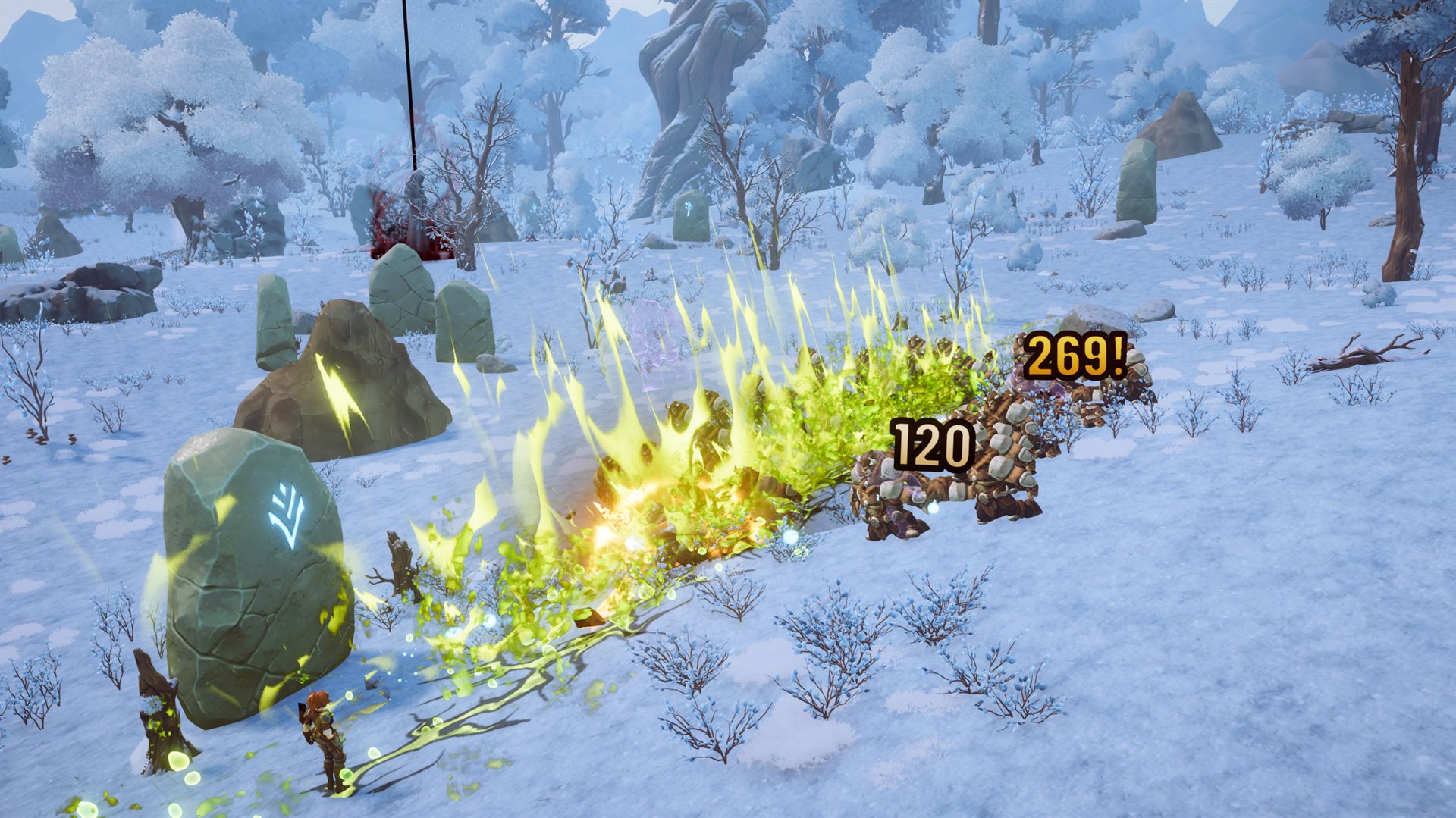
- Venom Rift is a new active ability. Tear a long poisonous fissure through the battlefield, striking everything along its path and leaving a violent toxic scar behind.
- Its eight-level path is complete. The rift grows longer, wider and more poisonous through the early levels. Plague Fault at level 6 makes existing Poison erupt without being spent, Serpent’s Wake at level 7 splits the rift into twin parallel fissures, and Worldvenom at level 8 lets poisoned enemies seed fractures of their own.
- Venom Rift always travels forward once. The old returning-rift idea is gone, so every upgrade strengthens the same readable forward rupture.
- Venom Rift has its cast sound. It was shipping silent.
- Venom Rift no longer paints bright rectangles over the ground. The rift renders as cracks and spatter again, on flat ground and against slopes.
Earthspikes
- Earthspikes knocks enemies back half as far, so the ground you clear stays within reach.
Lifesteal
- Lifesteal heals for what it says. It was throttled to a small trickle no matter how much damage you dealt, so a heavily invested build received a few health per second instead of hundreds. Lifesteal restores its full listed share of the damage your weapon deals now, limited only by your maximum health.
- Lifesteal percentages have been lowered to match. Leeching Temper rolls 0.15–0.25%, Vampiric Edge 0.25–0.40%, Relentless Assault 0.35–0.55%, Blood Pact 0.50–0.75% and Crimson Covenant 0.80–1.20%. Every lifesteal card at its best roll totals 5.35% on one weapon: far smaller on paper, and far stronger in practice now that none of it is thrown away.
The Loot Goblin, rebuilt
- The Loot Goblin cannot be killed, and never was worth killing. He always escapes. The encounter is not a kill, it is a robbery. Beat as much treasure out of him as you can before he gets away.
- His treasure is decided purely by how much damage you land on him. The more of him you empty, the better the loot. Nothing else moves it: not how many hits you landed, not luck, not timing.
- He drops exactly two items, every time. Damage no longer showers you with more loot. It makes the loot far better. A goblin you barely scratched hands over two Commons. A goblin you gut hands over Legendaries.
- Six treasure tiers: Scraps, Bronze, Silver, Gold, Mythic and JACKPOT. Each one you beat out of him bursts rubies and coins from his sack and pays a little gold on the spot.
- JACKPOT is brutal and worth it. You have to empty almost his entire reserve. Do it and you are nearly guaranteed a Legendary, with a real chance at two, plus a 60% chance of a free Giantforge enhancement rolled by your Luck under the Forge’s normal rules.
- Reaching JACKPOT ends the chase instantly. He erupts in gold, the world buckles around him, and he bolts.
- The Loot Meter rides above the goblin himself, filling as you damage him, with a marker for every treasure tier so you can see how close the next one is without looking away from the chase.
- The Loot Meter is colour-coded to the loot you are earning. It reads grey, then green, blue, purple and gold as you cross each threshold, so the tier you are in is the same colour as the item you are about to be handed.
- When he runs out of view the meter sticks to the edge of the screen, pointing the way he went, so a goblin behind a cliff is no longer a goblin you lost.
- He runs for five seconds longer, and telegraphs his getaway before it happens, giving you a clear final window to land everything you have left.
- Hitting him sprays treasure. Every meaningful blow shakes gold, coins and rubies out of his sack, harder the harder you hit.
- Gilded Incense is unchanged and still raises how often he shows up, which is considerably more exciting now.
Giant Remnant trials
- The Soul Chase target looks like a regular Loot Goblin. The obsolete purple orb around its model is gone. It keeps its own trial health and rules, so it cannot pay Loot Goblin treasure.
- The fleeing soul is much tougher, so the chase lasts long enough to be a chase.
Enemy pressure
- Regular stages aim for a set number of enemies. Two Wilds stages at the same point in a Journey send roughly the same amount of enemies at you, whichever land you picked. Biomes still decide what you fight: the archetypes, the mix of melee and ranged, how they move and form up. They just no longer quietly decide how many.
- Horde Pressure is a new run stat. It starts at 100% and says how many ordinary enemies you are inviting. Raise it and the Wilds get busier: more to kill, more to trigger, more that can reach you. It applies from your next stage, so gaining it never adds enemies to the stage you are already fighting.
- Journey cards tell you before you commit. Wilds cards show your Horde Pressure and roughly how many enemies to expect, so a denser stage is a choice you make rather than a surprise you walk into.
- Horde Pressure is the player-controlled ordinary-enemy axis. Bosses, minibosses, ritual defenders and set-piece encounters do not consume it.
- Giant Pressure is sustained pressure now, not giant swarms. Wilds begin with room for three pressure giants. Awakened statues, later Journey stages and Overtime add a limited amount of headroom, up to ten giants in the most extreme state.
- Giants arrive one at a time. Pressure and Overtime shorten the replacement delay instead of producing directional packs, keeping the threat constant without burying the battlefield under simultaneous spawns.
- Awakened statues make each giant matter more. Their health, damage, movement, size, XP and gold rewards, and chest chance all rise within explicit limits. Each awakened statue also trades a small share of the ordinary horde for that larger share of giants.
- The Giants Answer fills the remaining headroom. It can add up to three giants without exceeding the same ten-giant ceiling, while empowering every pressure giant already alive.
- Awakening a statue no longer slows you. Giant’s Grasp is gone. The lasting change to the run is the cost.
- Giant Pressure statues no longer restock. A regular stage offered its five statues, then quietly replaced them every time you opened the level-up draft, the reward wheel, the Forge or the pause menu, so one stage could be worth ten. It is five again.
- Overtime spends fewer frames on bodies and more on danger. The ordinary swarm is about 40% smaller, but health and damage climb harder, elites arrive faster and grow tougher, and giants escalate their cap, arrival rate, health and damage on the same clock.
Bosses
- Bosses have 50% more health. They were dying far too quickly against current builds. Minibosses and giants are untouched.
- Phalanx’s Iron Litany is a lasting battlefield hazard now. Two counter-rotating rings breathe around Phalanx for eighteen seconds, with moving openings that demand repositioning while Phalanx resumes fighting.
- Iron Litany’s formation is clearer and larger. The inner ring contracts to 8m instead of crushing down around Phalanx’s model, the outer ring stays at least 13m out, and the two layers breathe and counter-rotate at different speeds.
- Iron Processional replaces Firebreak Formation. Two banks of shrapnel march past you in successive waves, leaving a readable aisle that shifts with where you stand.
- Phalanx’s shrapnel attacks coordinate with Iron Litany. Salvos and wasteland bombardments avoid sealing its moving escape route, while still placing themselves where a moving player is heading.
- Wall of Death travels 15% faster and comes around once every 30 seconds instead of every few.
- Phalanx no longer uses Dark Onslaught. The shuriken-wave attack remains intact and exclusive to the Iron Tyrant.
- Phalanx’s kick is a real punt. A contact strike throws you roughly 30m horizontally with a modest lift, and stuns for three seconds.
- Morvessa’s Venom Sweep reads as a continuous green poison spray instead of a collection of disconnected beams.
- Orbs of Terror is a structured fan now. Most lanes commit to their course immediately, a limited set aims where you are heading, and a few curve once before staying true. Hits inflict a poison wound worth 25% of maximum health over time.
- Orbs of Terror move in controlled serpentine paths. More flank shots curve, with visibly varied weave size, cadence and phase, and every path still commits to its lane and settles before impact rather than homing at the last second.
- Nature’s Grasp unfurls at a readable pace. Morvessa’s creeping growth takes 6.3 seconds instead of 4.4, so you can see where it is going and get out of it.
- Nature’s Grasp warns before it hurts. A half-second line follows the ground to mark the exact danger lane, and the damaging growth cannot start until that warning finishes.
Enemy death feedback
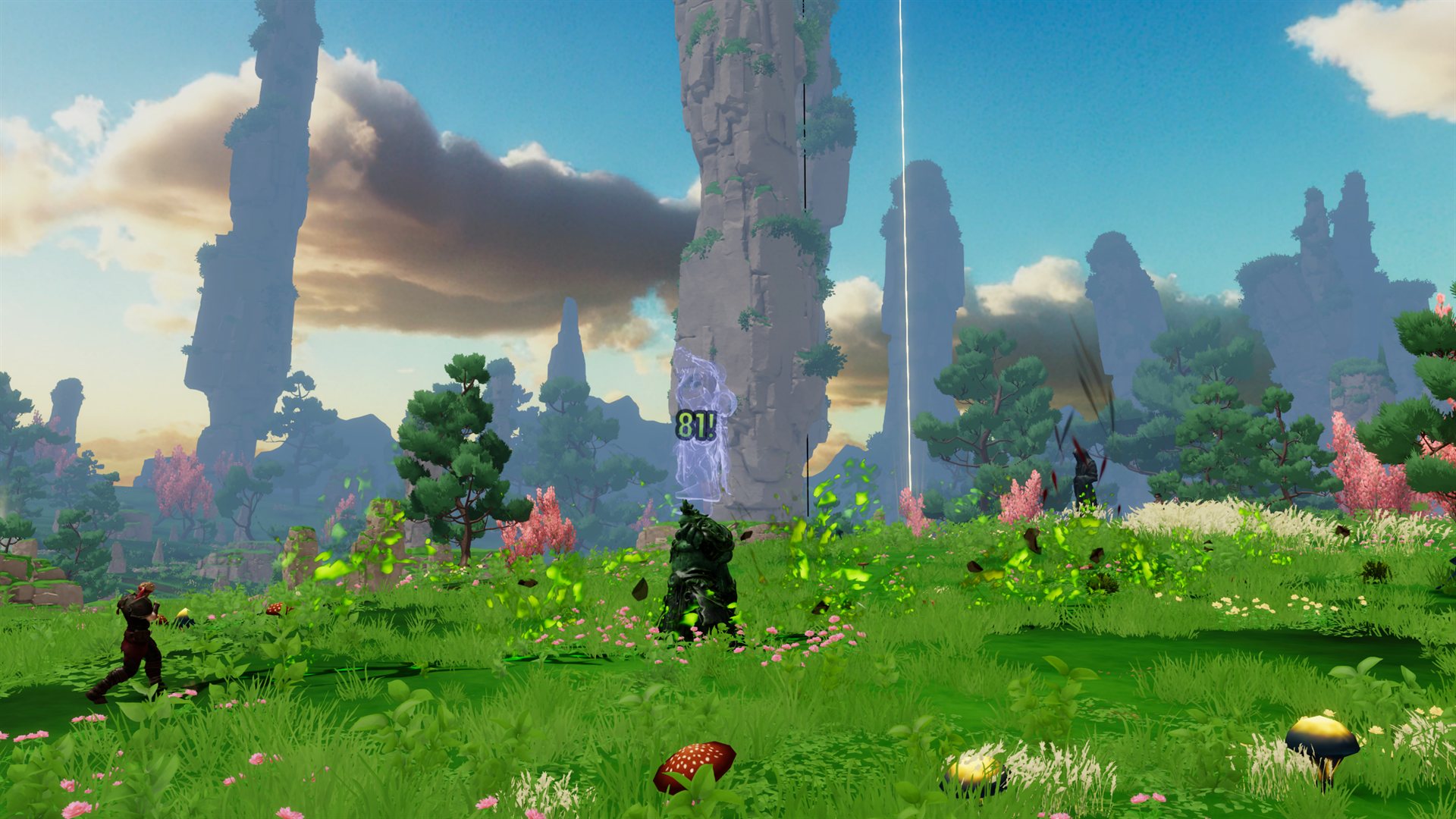
- Enemy deaths rupture in a burst of blood, fragments and rising spectral echoes. The effect scales with the importance and size of the enemy, so giants get the strongest treatment while true bosses keep their own death sequences.
- Heavy simultaneous kills stay readable. The most important deaths keep their full spectral silhouettes, while large wipes fall back to lighter wisps and particles.
Endless
- Endless is about the bosses now, and the field around them is finally crowded enough to say so. It opens with twelve giants instead of four and climbs to thirty-six, filling toward that number three times as fast as before.
- Giants move 20% faster in Endless, and health climbs 50% faster for giants and bosses alike.
- Endless enemies start at half their previous damage. Later scaling is unchanged. The whole curve simply starts lower.
- Pressure giants look and pay like giants. They appear 10% larger and grant double XP and Gold.
- Giants keep arriving when a boss shows up. A living boss used to occupy a giant slot, so the field quietly emptied for the whole boss fight. The two run side by side now.
- Ordinary giants no longer claim a boss health bar. Only proper Endless bosses use boss presentation.
- Endless bosses arrive in a fixed order. Ashen Colossus, then Iron Tyrant, then Morvessa, then Phalanx, and the sequence repeats harder each time.
- Ashen Colossus is a real boss now. It previously landed on exactly the same health as an ordinary pressure giant. It sits firmly boss-tier now, just under the Iron Tyrant.
- The Iron Tyrant is the right size. He was spawning at less than half his proper scale.
- Every proper Endless boss grants base 500 XP and 500 Gold, plus the existing weapon-slot-or-premium-item reward.
- Two bosses can stand side by side. A second boss switches every bar to a compact layout spread left and right across the top, one column per boss. When only one remains, it returns to full size.
- Every boss has its own cast bar, directly under its own health bar.
- The Gambling Man comes to Endless. Endless never reaches a Stage Complete screen, so the Giantforge and the Wheel of Fortune were unreachable once it began. He appears in the world and opens both. Wheel spin costs keep escalating across visits as they do elsewhere.
- The Giantforge has something to sell in Endless. Opening it from the Gambling Man showed an empty shop. The Forge stocks up now, and restocks each time Giant Threat rises.
- The Gambling Man’s menu is properly dressed. It was a stack of plain grey boxes. It uses the same panel, banner and lettering as the shop and the Battle Ledger now, shows your gold, and says what each choice costs before you commit.
- Loot Goblins can appear in Endless. Their usual chance, Luck bonuses, timing, limits and rewards are unchanged.
- Endless takes place in the desert. Temporary, while the mode is being tuned.
Combat sound
- Weapons stay audible in late-game combat. Firing sounds used to fade as a run went on and could vanish entirely in Endless while the weapon was plainly still shooting. Weapon fire, enemy sounds and boss telegraphs each get a guaranteed share now, so none of them can be drowned out by the others.
- Attack speed makes a weapon sound faster and heavier, not quieter. Rapid-fire weapons build into a continuous roar with individual shots cracking over the top of it. The faster you fire, the more dangerous it sounds.
- The Machine Gun is louder. It was the quietest weapon in the game even before the late-game problem. It sits properly alongside the others now.
- Boss and miniboss wind-ups cut through everything else. They previously counted for no more than an ordinary hit, so a heavy attack could announce itself and be lost in a crowded fight.
- Enemy attack and spawn sounds also survive dense fights. They were being suppressed even harder than weapon audio.
Controller support, rebuilt
- The controller layout was rebuilt from scratch. Left Stick moves, Right Stick controls the camera, and both work at the same time. The right stick is live at all times: no button to hold, no stick click.
- Mobility lives on the triggers. Right Trigger dashes, Left Trigger starts a Power Rush, and both fire early in the pull instead of needing to be bottomed out. A / Cross jumps.
- Y / Triangle interacts. Interact no longer shares a button with anything else.
- Your four active abilities sit on X, B, LB and RB, in the same left-to-right order as the ability bar.
- Your four weapon ultimates sit on the D-pad: Up, Right, Down and Left for slots one through four.
- The Menu / Options button pauses. L3 and R3 do nothing on purpose, because nothing important should fire from a stick pressed mid-scramble.
- The game shows the right buttons for the controller you are holding. Xbox pads show A / B / X / Y, PlayStation pads show Cross / Circle / Square / Triangle, Steam Deck shows its own buttons, and anything unrecognised falls back to a sensible generic set. Pick up a controller and the prompts change. Touch the keyboard or mouse and they change straight back.
- The action bar and weapon bar show controller buttons as icons rather than key letters when you play on a pad.
- The Settings menu is fully navigable with a controller. Bumpers move between tabs, the stick or D-pad moves the highlight, left and right adjust sliders and options, and B backs out. Only the Controls tab could be reached without a mouse before.
- Menus no longer open with nothing selected. If a screen would otherwise leave the controller with nothing to move from, the first option is chosen for you.
- The mouse cursor hides while you play on a controller and returns the moment you touch the mouse.
- Keyboard and mouse controls are unchanged.
Steam Deck
- The Steam Deck version runs the same game as the PC version. It previously shipped with reduced grass and ground cover, fewer props, no background mountains, lower-detail terrain, simplified terrain textures, reduced movement effects, and most significantly a much smaller playable area. All of that is gone. Deck generates the same worlds, at the same size, with the same environment detail.
- Steam Deck targets 60 FPS rather than 45.
- Starting a run on Steam Deck no longer hangs on the loading screen. The first stage could sit loading forever, or appear to crash, every time. The handheld build recovers now instead of waiting indefinitely.
- Steam Deck runs no longer die while a stage is loading. The handheld was loading world art at full desktop resolution and running out of room for it. World art is one step softer on Deck now, hard to spot on its screen, and stages have the room they need to finish building.
Camera and view
- The combat camera was rebuilt around one consistent view. It follows slopes and airborne movement more naturally, widens for Power Rush and nearby bosses, and only moves inward to prevent genuine terrain clipping. Trees, rocks, vegetation and other props never change camera distance, and the existing foreground fade handles them instead.
- Camera zoom controls and the old Classic view toggle have been removed. The field-of-view setting remains.
- Combat respects elevation. Movement follows traversable slopes, targeting aims at enemies above and below you, and grounded attacks and effects settle onto the world surface more reliably.
- Weapon firing overlays are temporarily disabled. Firearms and thrown weapons no longer play the awkward repeated firing animation. Spell-cast presentation is unchanged.
- Experience orbs are silent when collected.
Loot, rewards and card text
- Dropped loot chests appear on the map and minimap as a gold marker while they wait to be opened, and vanish the moment you claim one.
- The Card Gallery’s Enhancements tab is organised by weapon. It was one long undivided wall of cards with no way to tell which weapon could take which. Pick a weapon and you see what it can be given.
- Enhancements look like enhancements in the Gallery. They were drawn on the gold item card, so they read as items. They use the real Giantforge enhancement card now, with its rarity colour and its effect lines.
- Cards read like the game, not like the toolbox. Some weapon and upgrade cards had been describing themselves in development shorthand, down to distances printed to two decimal places. Demonlash simply tears through enemies ahead. No Appeal calls down a miniature Golden Verdict. Every weapon, upgrade, item and ability card was checked for the same problem.
Performance and stability
- The game reaches the main menu reliably instead of appearing frozen during startup. Capture and gallery content no longer loads before the menu is usable.
- The freeze when the stage timer hits zero is gone. Overtime used to lock the game up for over half a second at exactly 00:00, while the overtime music was opened for the first time. The music, the portal’s location and everything that appears with it are readied behind the loading screen now, so the timer runs out and the fight continues.
- Big waves arrive without a hitch. A fifty-enemy burst is roughly three times faster to put on screen. Enemies keep their look between appearances instead of rebuilding it every time.
- Stages load with far fewer freezes. The world used to be built two or three times over during a single load, with whole seconds where nothing moved. Each pass happens once now, spread across the loading screen. It is not perfectly smooth yet, but the game no longer looks hung while it works.
- Dropped loot costs almost nothing to keep on the ground. Every drop used to keep its full arrival effect running forever, so a single rainbow chest beam kept fifteen effects alive indefinitely. Drops play their flourish once and settle into a lightweight marker.
- Stage music waits until the loading screen is fully gone. This applies to regular, Ritual, Boss and Endless stages.
- A failed stage load can no longer drop you into an unfinished battlefield. A failure that can be recovered from is retried once, and a timeout or a repeated failure returns you safely to the menu instead of exposing missing terrain, enemies or objectives.
Settings
- Removed settings that no longer decide anything: the regular-stage overtime toggle, the random-stage-biome override, the player-gunfire-animation option and the experience-pickup-sound option. Regular stages always use their intended overtime flow, firearm and thrown presentation overlays stay disabled, and XP pickups are silent.